Commentary: As therapy sessions move online, more may finally seek needed help
SINGAPORE: The circuit breaker was a challenging menstruation for those in the psychology profession.
In the last few weeks, psychotherapy had to be carried out over phone or video calls.
There were many keenly felt concerns. Is information technology safety to conduct our therapy sessions well-nigh?
What about the homo connection between psychologist and client, which makes therapy piece of work?
Volition information technology go common cold and business concern-similar? Will therapy via phone or video-conferencing run into the needs of clients?
Despite harbouring these concerns, I came away learning much from the experiences of my clients, and take been humbled greatly as a clinician.
READ: Mental well-existence during COVID-nineteen: The rise of intimate sharing sessions with strangers
READ: 'Not the same on Zoom': For recovering addicts, why safety distancing could spell a relapse
CHANGES IN THE DYNAMICS BETWEEN CLINICIAN AND PATIENT
Going online or calling in for therapy has equalised the relationship betwixt psychologist and client.
Some of my clients never thought to merely leave the therapy room when they wished to avoid speaking about something.
But now, they can but "walk out" of a psychotherapy session, with the click of a push button. Although my clients laugh when I point this out, this ability makes clients feel less obligated to their therapist.
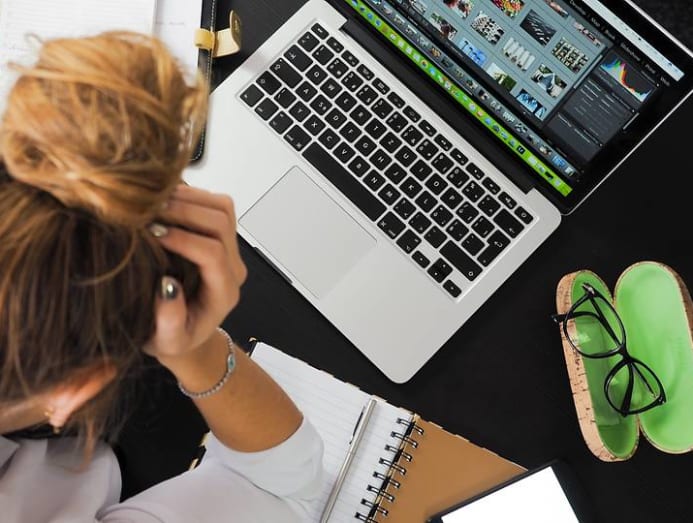
Such a dynamic has been empowering to children, adolescents, and adults I piece of work with, leading them to accept greater buying over their progress.
Some told me remote therapy has allowed them to open up up more easily. They fearfulness less about beingness judged when they aren't in the same room equally me.
For one young person, I offered to cover my camera so she couldn't come across me. She was surprised at how information technology was easier than she had idea to voice hard feelings.
READ: Commentary: On social media, life amid coronavirus risks becoming a popularity competition
READ: Commentary: This circuit breaker is making u.s. yearn for human interaction more
OVERCOMING FEAR AND STIGMA
Over the years, many clients shared they could not commit to therapy because of piece of work, school and other priorities – non to mention fears of how they could exist perceived by others if they said: "I demand time for therapy."
Some were agape to be recognised even when they decided to attend.
Others were and so afraid, they shuttered their windows and pretended they weren't home when I came over, dorsum when I worked in a community mental health team.
According to a 2022 report past the Institute of Mental Health, more than three-quarters of respondents with a mental wellness status did not seek any professional person aid.
Be information technology from stigma or a learned fearfulness, this unwillingness to get counselling tin exist changed with remote psychotherapy.

A young client of mine found it and then distressing to come into the clinic, she never fabricated it to therapy for a year.
With video-conferencing, she was able to cope past using the virtual background to "hide" herself through the distorted onscreen image. She could too type instead of speaking aloud.
This medium allowed her to access intendance she couldn't become confront-to-confront and gave her enough distance to feel safe.
She even said that she may effort therapy again.
READ: COVID-19 state of affairs throws into stark relief what victims of domestic abuse face
READ: Commentary: Our approach to mental health needs to alter. COVID-19 volition forcefulness us to
EMPOWERMENT: ONE VIDEO Call A TIME
During sessions, the therapy room is a protected, welcoming space for both therapist and client.
A place where all tin can speak in confidence is needed to conduct psychotherapy safely.
Yet during the circuit breaker, things got tricky. Video-conferencing may have allowed us to press on with sessions but non everyone has a big home where they can speak without being overheard.
Some of my clients shared that they speak leaning out the kitchen window because they share a 1-room flat with the entire family unit.
Some merely had no safe space at dwelling house, as their family members could eavesdrop on the session, and use what they overhear confronting them in quarrels and fights.
READ: Commentary: Isolated with your abuser? Why family violence seems to exist on the rising during COVID-19 outbreak
READ: Commentary: A abode tin can heal in the time of coronavirus
I encouraged such clients to text u.s. via the hospital's secure messaging platform. They could also attend therapy via video-conferencing and type their responses in the chat box.
But if it's unsafe for clients to do that, we tin can revert to face-to-face sessions.
Even those lucky enough to take privacy for an 60 minutes have hurdles to clear. They need to secure a rubber space for therapy (usually the part or bedchamber), get an earpiece, and ensure their device is fully charged and updated.
Ironically, while these might present a higher barrier to remote therapy, they also prod clients to accept charge and invest in their sessions to their benefit.
LISTEN: TraceTogether token and contact tracing apps: Privacy, data usage and other big questions
Later on I asked clients to brainstorm on how they could maximise their sessions, whether confront-to-confront or remote, they tell me these brainstorming exercises gave them a sense of emotional validation and greater autonomy.
Remote psychotherapy has helped clients engage with sessions, improving their chances of progress. As opposed to existence passive guests in a curated dispensary room, clients are less inclined to run into themselves as helpless, passive pawns in their treatment.
KEEPING IT REALISTIC AND ORGANIC
Equally much equally therapists do their best to empathize our clients' backgrounds and living circumstances, nosotros tin can only imagine how they live from clarification, unless nosotros made home visits.
However, thanks to video-conferencing, nosotros now have a glimpse of our clients' homes and can tailor our advice accordingly.
One of my clients had difficulty identifying situations that distress him, giving u.s.a. piffling to work with in sessions.
During our video call, he immediately expressed embarrassment about the stacks of papers and books strewn across his room. This ataxia had been distressing him for days.
Just similar that, we immediately had a situation that was raw and relevant to him. I prompted him to apply his learnt skills to this state of affairs, rather than have him search for some other less visceral scenario.
READ: Commentary: When gyms finally reopen, can we get rid of toxic gym culture?
READ: Commentary: COVID-19 online shaming and the harm it can cause
If not for the utilize of video-conferencing and telephone, I would not have gained these insights into their lives. Home visits are typically expensive – merely technology circumvents the loftier cost.
Regardless of what medium we use to communicate, the nearly essential part of therapy is however the human connection and ability to share freely.
One of my client has a protective domestic dog. As she's usually distressed and tense, he's constantly on guard to support her.
But, as the session progressed, he might accept realised she became calmer and more relaxed, because he settled comfortably on the floor to rest his head on her lap and promptly brutal asleep. It made me feel like I passed his examination in that instance.
If therapists hold on to the cadre of our work and remain open-minded to leveraging engineering science for therapy, these online sessions tin brand a significant difference in helping our clients achieve emotional breakthrough and complement contiguous meetings, no matter which stage of combating this pandemic Singapore is in, or even after.
BOOKMARK THIS: Our comprehensive coverage of the coronavirus outbreak and its developments
Download our app or subscribe to our Telegram channel for the latest updates on the COVID-19 outbreak: https://cna.asia/telegram
Dr Grace Soo is Senior Clinical Psychologist at the Plant of Mental Wellness.
Source: https://cnalifestyle.channelnewsasia.com/commentary/commentary-therapy-sessions-move-online-more-may-finally-seek-needed-help-298841
0 Response to "Commentary: As therapy sessions move online, more may finally seek needed help"
Post a Comment