what does christ do to mediate the new covenant?


In These Terminal Days: The Message of Hebrews
Sabbath School Lesson Begins
Bible Written report Guide - 1st Quarter 2022
Lesson 8 February 12-xviii
Jesus, the Mediator of the New Covenant
Sabbath Afternoon
Read for This Week's Study: Heb. 7:eleven�xix; Heb. 8:10�12; Jer. 31:31�34; Heb. 8:one�half dozen; Exod. 24:1�8; Ezek. 36:26, 27.
Retentiveness Text: "But as it is, Christ has obtained a ministry that is as much more than excellent than the old every bit the covenant he mediates is improve, since information technology is enacted on better promises" (Hebrews viii:half dozen, ESV).
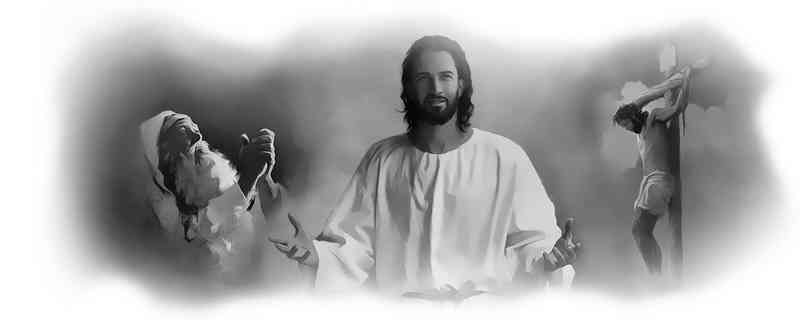
Past living a perfect life, and then by dying in our place, Jesus mediated a new, better covenant between united states of america and God. Through His expiry, Jesus canceled the penalisation of death that our trespasses demanded and made possible the new covenant.
This truth is explained in Hebrews 10:5-10, which identifies Jesus as having manifested the perfect obedience required past the covenant. It references Psalm 40, referring to Messiah'south desire to render to God total obedience: "Behold, I have come; in the scroll of the volume information technology is written of me: I please to do your will, O my God; your police is within my heart" (Ps. 40:7, 8, ESV). "In the original context this phrase ['to practise your volition'] described moral obedience to the will of God. The author of Hebrews uses the phrase to testify that the sacrifice of Christ fulfilled the will of God in providing an acceptable amende, which the animal sacrifices had non provided." — The SDA Bible Commentary, vol. 7, p. 460.
For Paul, this psalm caused special significance with the incarnation of Jesus. Jesus embodied the obedience of the new covenant. He is our case. Nosotros have been saved, not only because of His decease but also because of His perfect obedience.
Study this week's lesson to prepare for Sabbath, February 19.
Sunday ↥ February 13
The Demand of a New Covenant
Read Hebrews seven:11-nineteen. Why was a new covenant needed?
Co-ordinate to Hebrews, the fact that Jesus was appointed priest according to the order of Melchizedek unsaid that a new covenant had been inaugurated. The quondam covenant had been given on the basis of the Levitical priesthood (Heb. 7:xi, NASB). The Levitical priests acted as mediators betwixt God and Israel, and the police excluded anyone else from the priesthood. The writer concludes, and so, that a change of priesthood implies a change of the law of the priesthood, every bit well as the alter of the covenant (Heb. vii:12, eighteen, 19).
The effect with the old covenant was that it could not provide perfection (Heb. seven:11). Paul is talking about the Levitical priesthood and its ministry building (sacrifices, feasts, etc.). The brute sacrifices offered through them could not provide true, full cleansing from sin, nor access to God (Heb. 10:1-4; Heb. 9:13, 14; Heb. 10:19-23).
The fact that a new covenant was necessary does not mean that God was unfair with Israel when He gave them the erstwhile covenant. The Levitical ministry and the services of the tabernacle were designed to protect them from idolatry and also to point them to Jesus' hereafter ministry. Hebrews stresses that the sacrifices were "a shadow of the practiced things to come" (Heb. 10:ane, NKJV).
Past pointing them to Jesus, the sacrifices should take helped the people put their promise and faith in "the lamb of God who takes abroad the sin of the world" (John one:29, NKJV; compare with Isaiah 53). This is the aforementioned point that Paul makes when he says that the law was "our tutor to atomic number 82 us to Christ, and then that nosotros may be justified by faith" (Gal. iii:24, NASB) or that "Christ is the culmination of the law so that there may be righteousness for everyone who believes" (Rom. 10:four, NIV).
In other words, even the Ten Commandments, equally skilful and perfect as they are, cannot provide salvation (Rom. 3:20-28, Rom. vii:12-14). They provide a perfect standard of righteousness, but they exercise non provide righteousness, whatsoever more than looking in a mirror can erase the wrinkles of historic period. For perfect righteousness, we need Jesus as our Substitute.
Why can't the law salvage us? After all, if we continue all the commandments, and proceed them well, even flawlessly — why shouldn't that save the states?
Monday ↥ Feb 14
New and Renewed
Compare Hebrews 8:ten-12 with Deuteronomy 6:four-6, Deuteronomy 30:11-14, and Jeremiah 31:31-34. What does this teach us near the nature of the new covenant?
The hope of a new covenant in Hebrews refers back to Jeremiah. According to Jeremiah, God's promise of a new covenant was, in fact, a renewal of the covenant that He had first made with Israel through Moses (Jer. 31:31-34). It could be argued, then, that Jeremiah 31 was non strictly speaking of a "new" covenant but of a "renewal" of the original covenant with Israel. In fact, the Hebrew give-and-take for new, hadashah, tin can accept both the sense of "renew" and "brand new."
The outcome with the old covenant was that the people bankrupt it (Heb. eight:eight, nine). The covenant was not faulty; the people were. If Israel had seen through the symbols to the coming Messiah and put their faith in Him, the covenant would non have been broken. However, to be fair, there were many believers throughout Israelite history in whom the purposes of the covenant were fulfilled and who had the law in their hearts (Ps. 37:31, Ps. twoscore:eight, Ps. 119:xi, Isa. 51:seven).
While the new covenant is a renewal of the old covenant, there is a sense in which it is, indeed, new. Jeremiah'due south promise of a "new covenant" did non only envision a renewal of the weather condition that existed before the exile, which had been broken and renewed several times because the nation had lapsed several times into apostasy. And that's because the people were simply unwilling to go along upward their end of the covenant with God (Jer. 13:23).
Thus, God promised to do a "new thing" (Jer. 31:22). The covenant would not exist similar the covenant that God had made "with their fathers" (Jer. 31:32). Because of the unfaithfulness of the people, the promises that God made nether the Mosaic covenant were never fulfilled. Now, in virtue of the guarantee given by the Son (Heb. 7:22), God would fulfill the purposes of His covenant. God did not change His law or lower His standards; instead, He sent His Son equally a guarantee of the covenant promises (Heb. 7:22, Heb. 6:18-20). This is why this covenant does not have curses. It has only blessings considering Jesus fulfilled information technology perfectly, becoming a expletive for us (Gal. 3:13).
Read 2 Timothy ii:13. What tin can we learn from God'southward faithfulness to His people and to His plans as we consider our relationships with others and our plans?
Tuesday ↥ February 15
The New Covenant Has a Better Mediator
Read Hebrews viii:i-6. Why is Jesus a ameliorate Mediator of the covenant?
The Greek term mesites (mediator) derives from mesos ("heart") and denotes the one who walks or stands in the heart. It was a technical term that referred to a person who fulfilled one or more of the following functions: (1) an arbiter between two or more than parties, (2) a negotiator or business concern broker, (3) a witness in the legal sense of the give-and-take, or (4) one who stands as a surety and, thus, guarantees the execution of an agreement.
The English term "mediator" is too narrow a translation for mesites in Hebrews because it focuses only on the first two or three uses of the Greek term. Hebrews, even so, emphasizes the fourth function. Jesus is non conceived as "mediator" in the sense that He settles a dispute betwixt the Begetter and humans, or every bit a peacemaker who reconciles parties in disaffection, or as a witness who certifies the existence of a contract or its satisfaction. Instead, as Hebrews explains, Jesus is the guarantor (or surety) of the new covenant (Heb. vii:22). In Hebrews, the term "mediator" is equivalent to "guarantor." He guarantees that the covenant promises will be fulfilled.
Christ's death makes the institution of the new covenant possible because it satisfies the claims of the first covenant with State of israel (and fifty-fifty with the get-go humans in Eden), which had been broken (Heb. 9:fifteen-22). In this sense, Jesus is the guarantor who took upon Himself all the legal obligations of the covenant that had been cleaved. In another sense, Jesus' exaltation in heaven guarantees that God's promises to human beings will exist fulfilled (Heb. 6:19, 20). Jesus guarantees the covenant because He has shown that God's promises are true. Past resurrecting Jesus and seating Him at His right hand, the Father has shown that He will resurrect us and too bring us to Him.
Jesus is a greater Mediator than Moses because He ministers in the heavenly sanctuary and has offered Himself as a perfect sacrifice for united states of america (Heb. 8:i-5, Heb. 10:5-ten). Moses' confront reflected the glory of God (Exod. 34:29-35), but Jesus is the glory of God (Heb. ane:3, John 1:fourteen). Moses spoke with God confront to face (Exod. 33:11), but Jesus is God'southward Give-and-take personified (Heb. 4:12, 13; John ane:1-3, xiv).
Yes, Christ has satisfied the demands of the covenant for obedience. In this calorie-free, what is the role of obedience in our life, and why is it nonetheless then of import?
Midweek ↥ February 16
The New Covenant Has Ameliorate Promises
Nosotros may be tempted to call back that the new covenant has "better promises" in the sense that it has greater rewards than the old covenant had (a heavenly homeland, eternal life, etc.). The truth is that God offered the same rewards to Erstwhile Testament believers as He has offered us (read Heb. eleven:10, 13-16). In Hebrews eight:half-dozen, the "better promises" is talking near different kinds of promises.
The covenant between God and State of israel was a formal substitution of promises between God and Israel. God took the initiative and delivered Israel from Egypt and promised to pb them into the Promised State.
Compare Exodus 24:1-8 and Hebrews x:5-10. What are the similarities and differences betwixt these two promises?
The covenant between God and Israel was ratified with blood. This blood was sprinkled both over and beneath the altar. The people of Israel promised to obey all that the Lord had spoken.
"The condition of eternal life is at present but what it always has been, — just what it was in Paradise earlier the fall of our first parents, — perfect obedience to the constabulary of God, perfect righteousness. If eternal life were granted on any condition brusque of this, so the happiness of the whole universe would be imperiled. The fashion would be open for sin, with all its train of woe and misery, to be immortalized." — Ellen Chiliad. White, Steps to Christ, p. 62.
God satisfies the absolute demands of the new covenant for us because He gave His ain Son to come up and live a perfect life so that the promises of the covenant might be fulfilled in Him, and so offered to u.s.a., by faith in Jesus. Jesus' obedience guarantees the covenant promises (Heb. 7:22). It requires that God gives Him the blessings of the covenant, which are then given to us. Indeed, those who are "in Christ" will bask those promises with Him. Secondly, God gives us His Holy Spirit to empower us to fulfill His police force.
Christ has satisfied the demands of the covenant; therefore, the fulfillment of God's promises to us is non in doubt. How does this help you understand the meaning of ii Corinthians 1:xx-22? What wonderful hope is constitute here for united states of america?
Thursday ↥ February 17
The New Covenant Has Solved the Problem of the Centre
Compare the new covenant promises of Jeremiah 31:33 and Ezekiel 36:26, 27. How are they related?
The offset covenant certificate was written by God on tablets of rock and was deposited in the ark of the covenant equally an important witness of God'due south covenant with His people (Exod. 31:18, Deut. 10:one-four). Documents written in stone, however, could exist broken; and scrolls, as Jeremiah had experienced, could be cut upwardly and burned (Jer. 36:23).
But in the new covenant God at present will write His law in the hearts of the people. The centre refers to the mind, the organ of retentivity and understanding (Jer. 3:fifteen, Deut. 29:4), and especially to where conscious decisions are fabricated (Jer. 3:10, Jer. 29:13).
This hope did not just secure access to and knowledge of the law by everyone. Information technology likewise, and more than importantly, was to bring about a change in the heart of the nation. The problem of Israel was that their sin was engraved "with a pen of iron," "with a betoken of diamond … on the tablet of their middle" (Jer. 17:1, NKJV). They had a stubborn heart (Jer. xiii:ten, Jer. 23:17); therefore, information technology was impossible for them to do the right thing (Jer. 13:23).
Jeremiah did non announce a change of the law, because the problem of Israel was non the police just the heart. God wanted Israel'south faithfulness to be a grateful response to what He had washed for them; thus, He gave the X Commandments to them with an historical prologue expressing His beloved and care for them (Exod. twenty:1, 2). God wanted State of israel to obey His laws as an acknowledgment that He wanted the best for them, a truth revealed in their great deliverance from Egypt. Their obedience was to be an expression of gratitude, a manifestation of the reality of their human relationship.
The same is true today for us. Jesus' dearest and care in dying for us is the prologue of the new covenant (Luke 22:20). Truthful obedience comes from the heart as an expression of love (Matt. 22:34-40). This love is the distinguishing mark of the presence of the Holy Spirit in the life of the believer. God pours His love on us through His Spirit (Rom. 5:five), which is expressed in love (Gal. 5:22).
If ancient Israel was to honey God, even without the understanding of Christ'south death, why shouldn't we love God even more they did? How does obedience make manifest the reality of that love?
Friday ↥ February 18
Further Thought: "If our hearts are renewed in the likeness of God, if the divine love is implanted in the soul, will not the police force of God exist carried out in the life? When the principle of dear is implanted in the center, when man is renewed afterward the prototype of Him that created him, the new-covenant promise is fulfilled, 'I will put My laws into their hearts, and in their minds will I write them.' Hebrews 10:16. And if the police force is written in the middle, will it not shape the life? Obedience — the service and fidelity of dear — is the true sign of discipleship. Thus the Scripture says, 'This is the love of God, that we continue His commandments.' 'He that saith, I know Him, and keepeth not His commandments, is a liar, and the truth is not in him.' 1 John 5:iii; two:4. Instead of releasing man from obedience, information technology is organized religion, and organized religion only, that makes us partakers of the grace of Christ, which enables usa to return obedience. …
The closer y'all come up to Jesus, the more faulty you will appear in your own eyes; for your vision will be clearer, and your imperfections will be seen in broad and singled-out contrast to His perfect nature. This is prove that Satan's delusions have lost their power; that the vivifying influence of the Spirit of God is arousing you lot.
No deep-seated love for Jesus tin can dwell in the heart that does non realize its own sinfulness. The soul that is transformed by the grace of Christ volition admire His divine graphic symbol; but if we do non see our own moral deformity, it is unmistakable evidence that we have non had a view of the dazzler and excellence of Christ." — Ellen G. White, Steps to Christ, pp. sixty, 64, 65.
Discussion Questions:
- Think about the statements of Ellen G. White above. What does the fact that the closer we come to Christ, the more sinful we will appear in our own eyes tell us virtually how we must not permit the realization of our own defects crusade us to give up faith in despair?
- Dwell more than on the idea that the law is beingness written in our hearts. What does that hateful for the spiritual life of a Christian? How could understanding and experiencing this truth assist us avert the kind of "obedience" that is really only legalism, obedience that has been called "dead works" (Heb. 9:xiv)?
Inside Story~ ↥

Sabbath or Scholarship?
Information technology was an offering that the Seventh-day Adventist girl could not refuse: a full scholarship to study at a individual not-Christian schoolhouse.
Malevelev, who grew upward in an Adventist abode, had been taught since she was young to recollect God in all her decisions. The daughter had planned to enter eye school at Taiwan Adventist Academy when she finished sixth grade, just then recruiters from the private school showed up in her hamlet in the southern Kaohsiung region of Taiwan. They encouraged Malevelev and her parents, who belonged to the Rukai indigenous people group, to accept the total scholarship.
Tuition was loftier at Taiwan Adventist University, and information technology would exist difficult for the parents to beget. They asked the girl to become to the private schoolhouse.
During summer vacation, Malevelev visited the school and saw that she would be required to attend classes on Sabbath. She would not be able to go to church building to worship God. A disharmonize erupted within her: Should she accept the full scholarship or keep the Sabbath? As she struggled with the decision, she remembered God. She knew that she should choose the Sabbath.
At the end of the summertime, Malevelev's parents insisted that she get to the private school. The girl felt dreadfully discouraged, and she prayed fervently.
"God, assist me," she prayed. "Evidence me what to practice."
Taking courage, she spoke kindly only firmly to her parents.
"I desire to get to Taiwan Adventist Academy," she said. "I volition not go to classes on Sabbath considering I desire to go to church."
She explained her desire to remain true-blue to God by keeping all 10 commandments, including the fourth, "Recall the Sabbath solar day, to keep it holy" (Exodus 20:8; NKJV).
"I don&rsqup;t want to betray the truth taught by my grandfather," she said.
Seeing the girl's determination, her parents allowed her to study at Taiwan Adventist University.
Today, Malevelev has studied for five years at the school and is in the 11th grade.
"I'thousand very happy here," she said. "I have wonderful teachers and classmates, and we are like a large family unit. More important, I have made many Christian friends. Nosotros have morning and evening worship together, we pray together, and we study together. I cherish every moment at the school. Although I don&rsqup;t know what volition happen in the future, I know that God volition lead me and fulfill His wonderful plan for me."
She is glad that she was taught from babyhood to call back God always. Repeating Ecclesiastes 12:i, she said, "Think now your Creator in the days of your youth, Before the difficult days come, And the years draw near when you say, 'I have no pleasure in them.'"
"When yous need to make an important conclusion, believe in God and choose according to His will and pleasure," she said. "I encourage myself with this verse all the time. Now I am sharing my secret with you lot, and may God bless you."
This mission story illustrates the following components of the Seventh-day Adventist Church's "I Will Go" strategic program: Spiritual Growth Objective No. seven, "To help youth and young adults place God kickoff and exemplify a biblical worldview." Learn more than about the strategic plan at IWillGo2020.org.
Produced past the Full general Conference Role of Adventist Mission. electronic mail: info@adventistmission.org website: www.adventistmission.org
All Rights Reserved. No function of the Adult Sabbath Schoolhouse Bible Study Guide may be edited, contradistinct, modified, adapted, translated, reproduced, or published past whatsoever person or entity without prior written authorization from the General Conference of Seventh-day Adventists.
Sabbath School Lesson Ends

For questions and concerns about the Study Guide,
delight contact the editor of the Bible Study Guide, Clifford Goldstein
The web version of the Sabbath School lesson is published on this site by permission of the Office of the Adult Bible Study Guide, General Conference of Seventh-day Adventists.
Website contents copyright 1996-2020 by Sabbath School Net, an independent supporting ministry building.
For permission to re-create contents of the web version of the Sabbath School lesson, delight contact both the Office of the Adult Bible Study Guide and the publisher of this site.
All art in these lessons and on the cover is published on this site by permission of GoodSalt.com.

We invite you to join a word of this lesson each day on the Sabbath School Cyberspace Daily Lessons blog. And on Sabbath mornings, you are warmly invited to join a group discussion of the week's lesson in your local Seventh-day Adventist congregation.
Sabbath School Net Home folio | Directory of Sabbath Schoolhouse Bible Written report materials
Sabbath School Net is an independently funded supporting website not affiliated with nor funded by the Sabbath School Department of the Full general Conference of Seventh-24-hour interval Adventists)It is run by volunteers and costs are covered solely by donations from the users of this site likewise as the small commissions generated by sales through our links to online stores.

If you are using this site regularly, delight pray for God'south approval on our visitors and ask Him to print you how you tin can help with the costs of putting this site up every month. We appreciate any gift to back up the ongoing publication of SSNET, and only you lot and God know how much you lot can give. Even a modest donation every month helps. And larger gifts are much appreciated. (No, yous don't need a PayPal business relationship. Simply cull the "Continue" link to the left of the PayPal registration. And, yeah, it's safe - as prophylactic as your online banking company business relationship.)
Sabbath School Net is a participant in the Amazon Services LLC Associates Program, an affiliate advertizement program designed to provide a ways for sites to earn advert fees by advertising and linking to Amazon.com.
You can find a sampling of materials available to help you in your studies at our SSNET Shop. (We will get a small commission not only from whatsoever books yous purchase only too from whatever else you purchase at the same time. These commissions help to underwrite a modest portion of the cost of publishing this site.)
You tin too become directly to the home pages of stores which will pay us a modest commission for whatever you choose to buy, without costing you a penny extra: Amazon.com | Amazon.ca | ChristianBooks.com | AbeBooks Store
Archive of previous Adult Sabbath School Bible Study Guides
Prepared for the Internet by the SSNET Web Team.
Contact the Sabbath Schoolhouse Internet Web Team
Go back to top of page
Source: https://ssnet.org/lessons/22a/less08.html
0 Response to "what does christ do to mediate the new covenant?"
Post a Comment